how satellites rule our world

BBC2 showed a really good programme about satellites last night.  This screenshot showing a satellite passing over the Highlands is taken from about 17 minutes into the show.  Click on the picture to visit the BBC’s own page about the documentary.

It was quite eye-opening to see just how much modern society relies on satellite technology.

You can download the entire programme using the link below.

ray diagram revision

We’ve reached the Space unit and are almost at the end of the course.  I showed you how to draw ray diagrams when we looked at lenses during the Health Physics unit.  Some people have asked me to repost these video clips as they were not sure how to draw ray diagrams for our telescope this morning.

Watch these clips and make sure you know the six terms we use to describe the image formed by a lens. You should be able to select three words to describe the image in your ray diagram.

how to draw a ray diagram from mr mackenzie on Vimeo.

The second video looks at a ray diagram when the object is less than one focal length away from the lens.

ray diagram for objects closer than 1f from mr mackenzie on Vimeo.

Once the ray diagram is complete, we need to describe the image that has been formed.  The description must tell us about the size, orientation and type of image that is formed.

Size
If the image is larger then the original object, we say the image is magnified
If the image is smaller than the original object, we say the image is diminished.

Orientation
If the image is the same way up as the object, we describe it is upright.
If the image is upside down compared to the object, we describe it as inverted.

Type
If the object and image are on opposite sides of the lens, it is a real image.
If the object and image are on the same side of the lens, it is a virtual image.
AH investigation report

This week is your last chance to submit a draft of your investigation report for proof reading.  I have already given you a copy of the SQA guidelines for candidates.  You might also find the attached uncertainties document helpful.  Pay special attention to the final page; reports that fail to account for calibration uncertainty will be penalised by the external marker.

If you are struggling with uncertainties in Excel, have a look at the two linest documents I posted earlier this year.

Read

electric motors

 
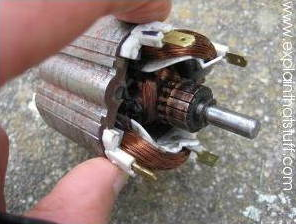
 image by explainthatstuff

We’re finishing off the electricity unit by looking at electric motors.  The page I used in class to help explain how a simple electric motor works is available here.

Here is another nice animation that shows the key parts of an electric motor.  It will stop after a few rotations but just reload the page to see it again.

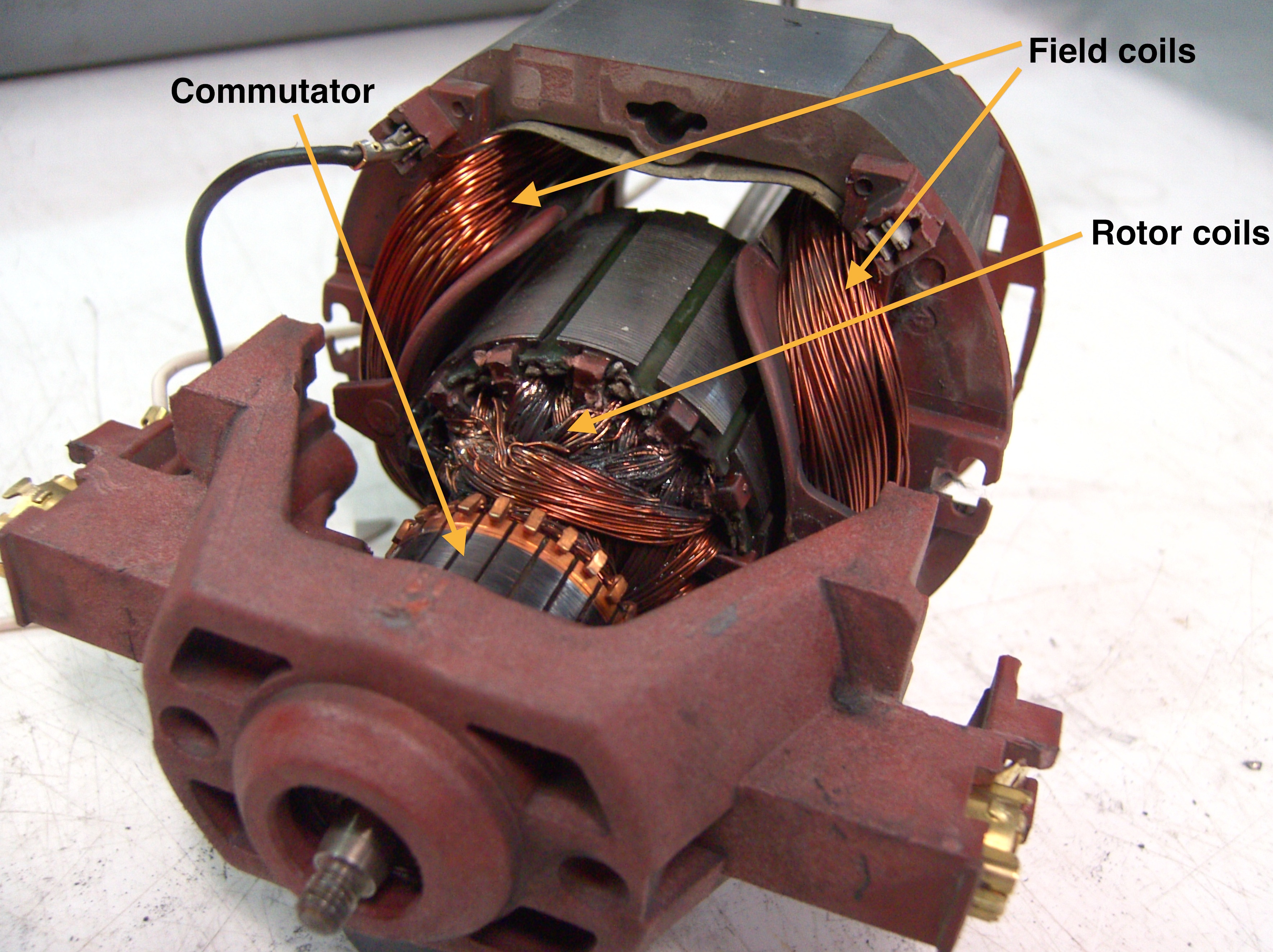
Real electric motors have a few modifications;

  • they use field coils instead of a bar magnet – the field coils form a strong electromagnet when current passes through them.  The field coils do not rotate.
  • the single rotating coil is replaced by several rotating coils
  • there are more contacts on the commutator – each pair connects to a different rotating coil
  • the brushes are often made from carbon instead of metal – the carbon conducts electricity and can withstand high temperatures.  Carbon also moulds to the shape of the commutator to give a good electrical contact

image by marrrci