S3 how a TV works – part 3

By , September 6, 2010 1:31 pm

The site I have been using throughout the television section of the course is here.

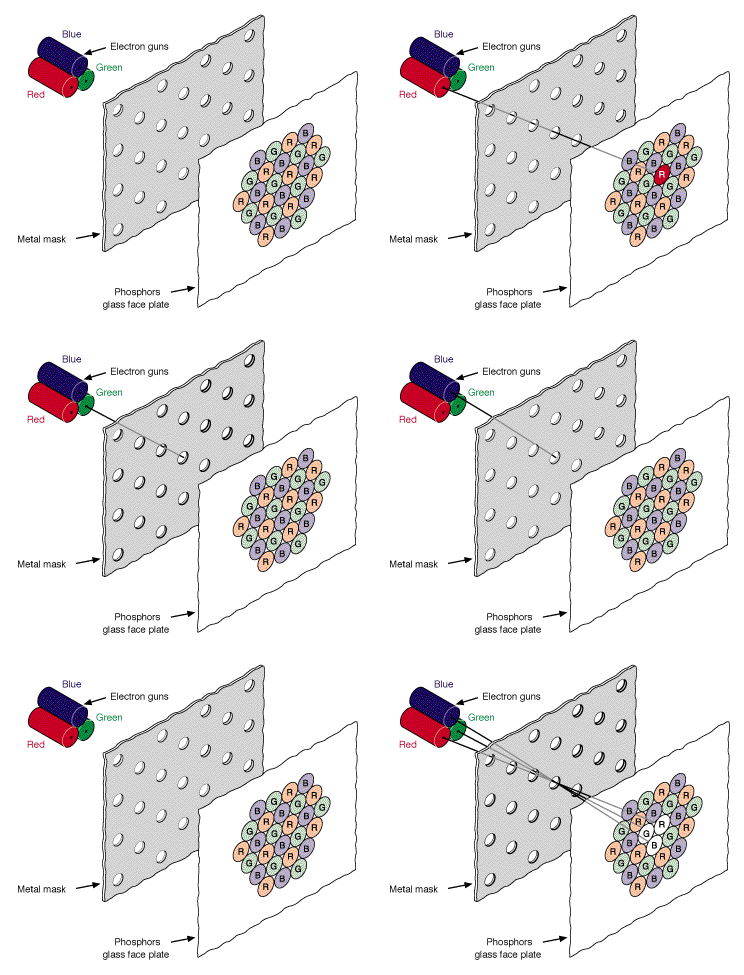
The shadow mask makes sure that electrons fired from the filament responsible for each colour of sub-pixel do not hit the wrong phosphor dots, e.g. electrons sent by the “green” gun do not reach the phosphor dots that glow red or blue.  This animation shows how the shadow mask works.
S3 how a TV works – part 2

By , September 6, 2010 1:09 pm

Last year, S3 recorded a short film as they took apart a colour portable TV. You can watch it here or download it using the link underneath the video player.

inside a tv set from mr mackenzie on Vimeo.

S3 how a TV works – part 1

By , September 6, 2010 12:40 pm

Here is a short video clip showing how an image can be built up on a TV screen, one line at a time.  In a real TV set, the beam moves much more quickly (about 7000 m/s!) across the screen and 25 complete images are shown each second.

raster scan from mr mackenzie on Vimeo.

Remember that in a real TV set, the beam does not scan its way back up the screen but takes a “flyback” from the bottom right to the top left corner to start on the next image.

how to draw scale diagrams

By , September 6, 2010 9:36 am

Here is a short video covering the points we discussed when we drew scale diagrams to find displacement vectors.

Vector Scale Diagrams from mr mackenzie on Vimeo.

Panorama Theme by Themocracy